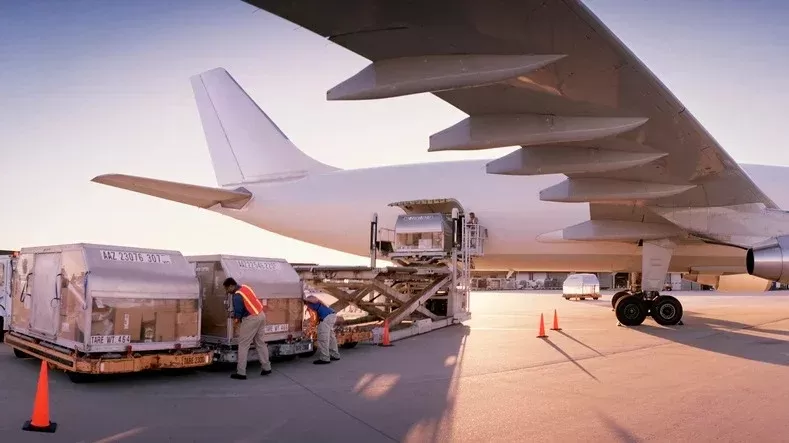
✈️ I. Understanding Air Freight Peak and Off-Peak Seasons Is the First Step to Cost Control
International air freight pricing and delivery performance are notably affected by seasonal changes. Instead of the fixed-rate logistics models, air freight is a dynamic market where every year capacity, demand and pricing are changing through-out the entire year. These fluctuations have a direct impact on the logistics budgets of small and medium-sized enterprises (SMEs), their delivery reliability, and inventory planning.
The SMEs during the peak seasons usually confront the situation of higher freight rates, no space for cargo, and less stable schedules. Shipments become more expensive, less predictable, and harder to manage. On the other hand, off-peak periods have quite stable capacity and more attractive pricing conditions.
If SMEs are aware of air freight peak and off-peak seasons, then they will be able to make shipments more strategically, improve cash flow, and avoid unnecessary logistics risks.
📊 II. What Do “Peak Season” and “Off-Peak Season” Mean in International Air Freight?
In the air freight industry, peak season refers to periods when cargo demand exceeds available aircraft capacity, leading to higher freight rates and tighter booking conditions. Off-peak season, by contrast, occurs when cargo volumes decline and capacity becomes relatively abundant.
The interplay among capacity, volume, and price is straightforward. The increase in demand that outstrips the available space will cause rates to go up and the reliability of service to go down. On the other hand, when demand declines, pricing will be more negotiable and scheduling more flexible.
The international air freight market has distinct cycles that follow retail demand, manufacturing schedules, and the global trade flow. The precise dates may vary slightly from one year to another, but the general pattern of peak and off-peak seasons stays the same.
📈 III. When Does the International Air Freight Peak Season Usually Occur?
1. The Traditional Second-Half Peak Season (Core Peak Period)
The most important season of air freight usually happens between August and November. Mainly, this time is marked by global retail restocking and the demand for cross-border e-commerce operations, which are timed for the end-of-the-year sales.
Factories and merchants hurry to get their products to foreign markets, leading to a fierce battle for the scant cargo space. Over this period, there is a clear increase in freight rates and a decrease in booking flexibility. Schedule reliability turns into a major issue, particularly for small and medium-sized enterprises (SMEs) that are not capable of easily incurring the cost of delays.
2. Year-End and Holiday-Driven Demand Surges
The specific sale events besides the general second-half peak are the ones that cause short-term demand spikes. Black Friday, Cyber Monday, Christmas, and New Year selling are among the most common cases that need urgently to be stocked up.
The periods of demand are a little bit sudden but the effect on air freight is very high. Even the companies that rely on ocean freight most of the time will be forced to airfreight temporarily, which will make the situation of capacity more severe and consequently lead to a faster increase in rates.
3. Non-Typical Peak Seasons Triggered by Special Events
Calendar doesn't always govern the peak seasons. The supply chain may have to get the cargo to air freight from sea due to disruptions, certain geo-political happenings, or congestions in ocean freight lasting a long time.
These atypical peaks will be unpredictable in timing but can be very disruptive. However, they do not happen every year; their influence on price and capacity could be as great as that of traditional peak seasons.
📉 IV. When Does the International Air Freight Off-Peak Season Occur?
1. Early-Year Off-Peak Period
The off-peak season that is most consistently experienced by the industry usually takes place during the period from January to March. With the end-of-year sales finished, the demand for global shipping has noticeably fallen.
At this point, cargo space is easily available, freight rates are almost at the same level, and airlines are more probably than ever willing to negotiate. The SMEs will find this time as a great opportunity to lower their transportation costs and at the same time get more predictability in their shipments.
2. Mid-Year Stable Period
The month of May and June is usually considered as the months of the relative balance in demand. A moderate demand is the characteristic of those months and the market does not operate very emotionally as during the peak months.
This period is very appropriate for regular restocking, adjusting the inventory, and trying new logistics routes with the least pricing pressure.
🏢 V. Why Do Peak and Off-Peak Seasons Affect SMEs More Than Large Enterprises?
In general, small and medium-sized enterprises (SMEs) are in a weaker position than airlines when it comes to negotiating and they do not enjoy many priority guarantees. During the peak season, capacity is often first given to bigger shipping companies and, as a result, smaller companies may be left with less.
Another aspect is the sensitivity of cash flow. Freight rates that go up during peak periods cause operating budgets to be immediately stressed. On the other hand, delays in deliveries during the peak season can very quickly result in stockouts, loss of sales, or even fines due to breach of contract.
Logistics errors made by SMEs in the course of peak periods are likely to carry extremely high costs thus it is very important for them to have good knowledge of the seasonality.
🧭 VI. A Third-Party Logistics Perspective: How to Plan Air Freight Across Peak and Off-Peak Seasons
1. Using Off-Peak Periods to Pre-Position Inventory
Non-urgent cargo can be moved during off-peak months to reduce overall transportation costs. This approach balances warehousing expenses against freight savings and lowers exposure to peak-season volatility.
2. Prioritizing Timeliness During Peak Season
When shipping during peak months is unavoidable, the primary goal should be delivery reliability rather than cost minimization. Stable routes, dependable airlines, and realistic time buffers are essential for protecting critical orders.
3. Combining Transport Modes for Greater Flexibility
A mixed strategy using both ocean and air freight allows SMEs to reserve air transport for high-value or urgent goods while relying on sea freight for standard inventory. This approach improves cost efficiency without sacrificing responsiveness.
Professional logistics providers such as Forest Leopard support these strategies by coordinating air freight, ocean freight, customs clearance, and warehousing services. Through integrated planning and multi-carrier resource management, Forest Leopard helps SMEs navigate seasonal fluctuations more effectively
🛡️ VII. The Importance of Third-Party Logistics in Managing Air Cargo Seasonality
Established third-party logistics providers foresee market cycles with the help of industry data, which also includes insights aligned with IATA trends. They assist their customers in making shipping plans for a whole year or for a quarter instead of being constantly reacting to each shipment.
Providers such as Forest Leopard not only support space assurance in the busiest months of the year by sharing resources among airlines and following capacity trends but they have also placed seasonal unpredictability into the format of manageable variables through careful planning and active cooperation.
✅ VIII. Mastering Air Freight Seasonality Leads to More Confident Shipping Decisions
Peak and off-peak seasons in international air freight are unavoidable, but their impact can be managed with foresight. For SMEs, planning ahead consistently delivers better outcomes than last-minute reactions.
By understanding seasonal patterns and working with professional third-party logistics partners, businesses can build a more stable, cost-effective, and resilient international air freight strategy.
❓ Frequently Asked Questions (FAQ)
1. Are international air freight peak seasons the same every year?
They follow consistent patterns, but exact timing can shift due to market and supply chain changes.
2. Is air freight always expensive during peak season?
Rates are generally higher, but early planning and stable routes can help control costs.
3. When is the best time for SMEs to use air freight for cost efficiency?
Early-year and mid-year off-peak periods usually offer the best balance of price and capacity.
4. Should SMEs avoid air freight entirely during peak season?
No, but air freight should be reserved for urgent or high-value shipments during peak periods.
5. How can a third-party logistics provider help manage seasonal risk?
By forecasting demand, securing capacity, integrating transport modes, and turning seasonal volatility into a planned process.

 EN
EN
 FR
FR
 ES
ES
 JA
JA
 PT
PT
 RU
RU
 AR
AR
 中文
中文